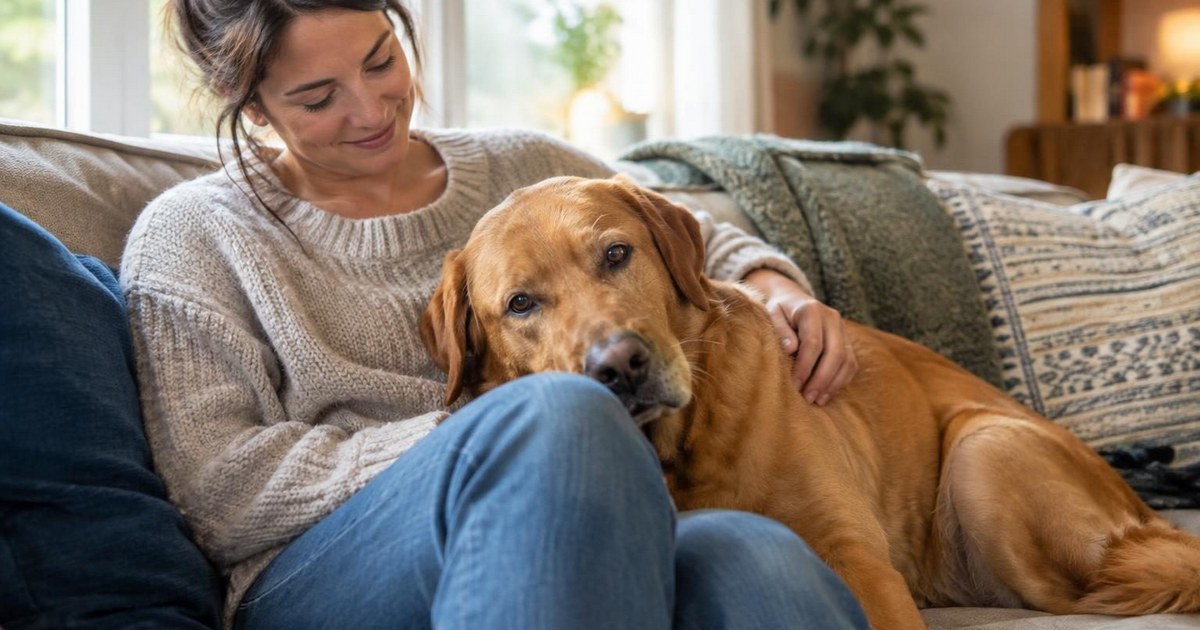
That heavy, wholehearted lean into your shin is one of the quieter ways many dogs say, “I’m with you.” It can happen while you make tea, when you sit down after work, or just as the lead comes out for a walk. For most dogs, leaning is a perfectly ordinary social behaviour: a bid for contact, reassurance, attention or simply a comfortable place to rest.
It can also feel surprisingly intense. Some dogs do not merely touch a leg with their shoulder. They settle their entire side against a person, relax their weight and seem prepared to remain there indefinitely. That does not automatically mean they are anxious, dominant, protective or unwell. The useful clue is not the lean by itself. It is what is happening around it, and what the rest of your dog’s body is telling you.
A lean is often a social choice
Dogs use physical contact in many small ways. They sit on feet, rest a chin on a knee, wedge themselves between people on the sofa and follow a favourite person from room to room. Leaning belongs in the same family of behaviour. Your dog may have learned that leaning gets a pleasant response: a hand on the chest, a scratch behind the ear, a kind word or a pause in your busy day.
Some dogs also lean when they are trying to work something out. A visitor at the door, a noisy lorry passing outside or an unfamiliar dog across the pavement can make a dog seek proximity to the person they trust. In that moment, your dog is not necessarily frightened. They may simply be checking in.
Watch for a loose body, soft eyes, normal breathing and an easy ability to move away again. A dog who leans, accepts a stroke, then trots off to investigate a toy is usually communicating comfort and connection.
Why some dogs are especially committed leaners
Personality plays a large part. Confident, friendly dogs can be very physically affectionate, while more reserved dogs may prefer to be nearby without touching. Breed tendencies, early experiences and household routines all shape this too. A dog who has always been welcomed onto laps and sofas may be more likely to use body contact than one who has learned to settle on a bed across the room.
Size does not necessarily make a difference. A small dog may lean with surprising determination, and a large dog may have no idea that their affectionate gesture can make balancing on one foot difficult.
There is also a practical possibility: your dog may be choosing the most comfortable spot. If you are standing beside a warm radiator, blocking a draught or offering a stable surface during an exciting moment, the lean may be partly about convenience. Dogs are not above taking advantage of good furniture, good heating or a reliably available human leg.
Context changes the meaning
The same behaviour can mean different things on different days. Think of the whole scene rather than trying to translate one gesture in isolation.
A dog who leans against you during a thunderstorm, while lip licking, holding their ears back or scanning the room, may be looking for reassurance. A dog who leans when a stranger reaches over their head might be uncomfortable with that interaction. A dog who leans at the end of a long walk, moves stiffly when getting up and avoids jumping into the car may be seeking support or showing signs of discomfort.
None of those examples can be diagnosed from a lean alone. They are reasons to pay attention to patterns. Does it happen only in one place? Around particular people or dogs? After exercise? When your dog is tired? Has a previously independent dog suddenly become unusually clingy?
A few days of calm observation can be more useful than a single anxious internet search. Make a mental note of timing, triggers and any other changes in appetite, sleep, movement, toileting or mood.
Leaning is not the same as head pressing
Dog owners sometimes hear about “head pressing” and worry that every nuzzle against a person is a warning sign. These are not the same thing.
An affectionate dog may push their forehead into your hand for a scratch, rub their face on your leg or rest their head on your lap. That is normal contact when the dog is responsive, comfortable and otherwise behaving as usual.
Concerning head pressing refers to a dog persistently pressing their head against a wall, floor, furniture or another firm surface in an unusual way. It is not a cuddle and should not be dismissed as one. If a dog is doing this, particularly if they also seem disorientated, unsteady, unusually quiet, distressed, have a seizure, altered vision or other sudden neurological changes, contact a vet promptly. If the symptoms are sudden or severe, use an urgent veterinary service.
The distinction matters because it prevents two unhelpful reactions: treating a potentially serious new behaviour as a cute quirk, or becoming alarmed every time an affectionate dog asks for a head rub.
When a lean may warrant a check-in
Most leaning needs no intervention beyond enjoying the moment. It is sensible to arrange a veterinary conversation, however, if the behaviour is new and persistent alongside signs that your dog may be uncomfortable. Those signs can include limping, reluctance to use stairs, difficulty settling, yelping when handled, reduced interest in walks, a hunched posture or a noticeable change in energy.
Pay attention if your dog is leaning heavily to one side, losing balance, circling, tilting their head or appearing dizzy. Those are not simply variations of affection. A vet can assess the wider picture and advise you on the right next step.
Older dogs deserve particular patience here. Changes in mobility can be subtle at first. A dog may still be keen for a walk but take longer to rise after resting, hesitate before getting into the car or choose to brace against you when standing. Recording a short video of the behaviour at home can be helpful if it does not happen clearly during an appointment.
How to respond without accidentally making worry worse
If your dog leans because they want contact, calm affection is a good response. Stroke the chest or shoulder if they enjoy it, speak normally and allow them the choice to stay or move away. You do not need to turn every lean into a training exercise.
If the lean appears connected to a mildly worrying situation, try to increase distance from what is bothering them rather than insisting they face it. On a walk, cross the road from a noisy construction site or give another dog more space. At home, offer a quiet resting area away from visitors. Your relaxed presence can help, but forcing physical reassurance on a dog who is trying to move away can make them feel trapped.
It is also worth teaching a comfortable settle on a bed or mat. This gives dogs another option when they need a break and helps owners spot a meaningful change. A dog who usually settles easily but starts pacing, clinging or refusing their bed is giving you more information than a dog who has always liked leaning.
The most useful question is not “Why is my dog leaning?” It is “What is my dog asking for right now?” Often, the answer is wonderfully simple: company, a scratch and a familiar person nearby. When the answer seems less clear, look at the whole dog, notice what has changed and get professional advice if there are signs of pain, illness or altered balance. That approach leaves room for both affection and sensible attention, which is exactly what a devoted lean deserves.