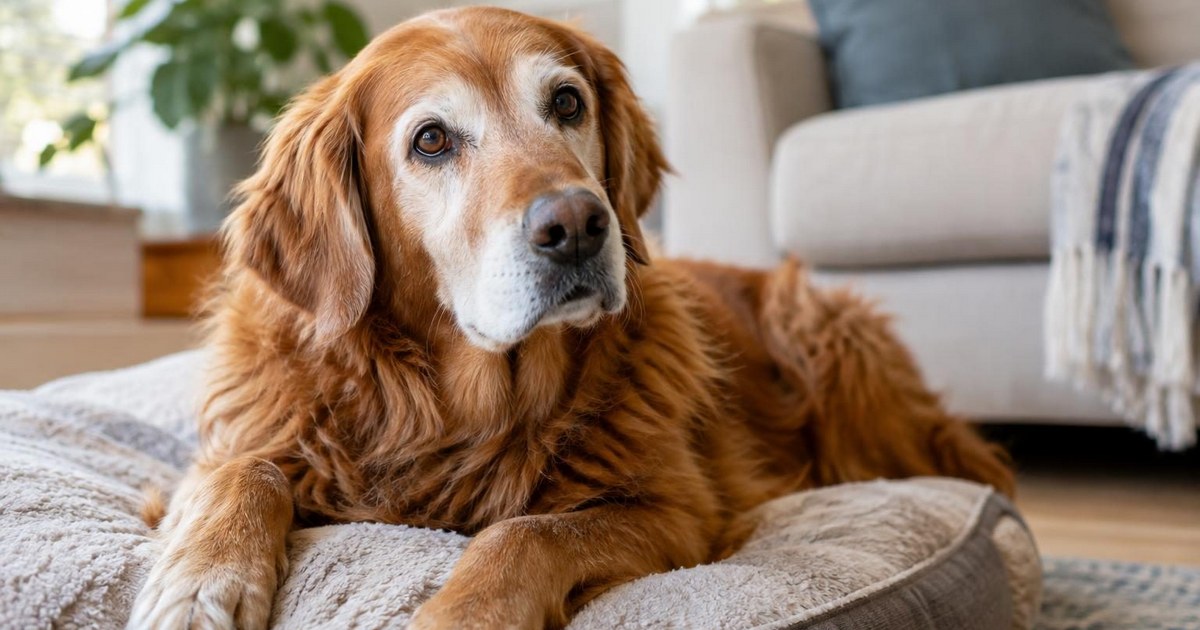
The moment a dog becomes a senior is rarely as obvious as a birthday cake would suggest. Many older dogs still greet visitors at full speed, campaign for dinner with the same conviction and rediscover their inner puppy the second a lead appears. Ageing is usually quieter than that. It shows up in small adjustments to a familiar day: a pause before the stairs, a different sleeping pattern or a once-effortless jump that now gets carefully considered.
There is no single age at which every dog becomes old. Size matters, with large and giant breeds generally reaching their senior years earlier than small dogs. The American Kennel Club’s guide to recognising when a dog is senior is a useful reminder that life stage is more helpful than a one-size-fits-all number. These 10 clues are not a diagnosis or a scorecard. They are reasons to pay closer attention, particularly when a change is sudden, pronounced or accompanied by pain, appetite changes or unusual behaviour.
1. The face is getting frosty
A sprinkling of grey around the muzzle, eyebrows and chin is one of the most recognisable signs of maturity. Some dogs start to go grey surprisingly young, while others keep their dark faces well into later life, so it cannot tell you a dog’s precise age. Still, when the new silver is joined by a slightly slower morning routine or more rest between activities, it can be a useful visual prompt to think about senior-friendly care. Take the occasional clear photograph, too. Small changes are easier to notice over months than from one day to the next.
2. Getting up takes a little longer
A dog who once sprang off the sofa may begin to stretch, shift their weight and rise in stages. They may be stiff after a long sleep but loosen up after a gentle walk, or hesitate before getting into the car. Do not write this off as a harmless quirk of getting older. Mobility changes can have several causes, and discomfort is not something a dog should simply have to live with. Note when it happens, whether it affects one side and what activity came before it, then share those observations with a vet.
3. Their naps have become longer, and sometimes stranger
Senior dogs commonly need more sleep, but the important question is whether their resting pattern has changed. Perhaps your dog now retires before the household does, wakes and wanders at night, or seems sleepy all day after a restless evening. A quieter lifestyle can be entirely appropriate for an older dog, yet a major switch in sleep, alertness or nighttime behaviour deserves attention. A calm sleeping area, predictable routine and a discussion with the vet can make a real difference when the change is persistent.
4. The stairs have become a negotiation
Watch what happens at familiar obstacles. An older dog may pause at the bottom of stairs, take them one at a time, choose a gentler route around a bank or look to you before jumping into the boot. These are often practical adjustments rather than stubbornness. Good management is not about forcing a dog to prove they can still do something. It may mean using a ramp where appropriate, improving traction on slippery floors, keeping nails well maintained and arranging exercise around what your individual dog can do comfortably.
5. Familiar sounds and sights are less reliable
Your dog may sleep through the post arriving, fail to spot you across the park or startle when touched from behind. Changes in hearing and vision can happen with age, and they can make a normally confident dog seem distracted or unexpectedly jumpy. Keep communication kind and predictable. Approach where your dog can see you, use a consistent verbal cue before touching them, and avoid rearranging furniture without need. Because sensory changes can also have other explanations, a new change in responsiveness should always be raised with a vet.
6. Their body shape is changing despite the same dinner
A senior dog can gain weight as their activity falls, or lose muscle and condition even when the bowl appears to be emptied as usual. Either direction matters. Extra weight can make daily movement more difficult, while unplanned weight loss is never something to casually attribute to age. Regular weigh-ins, ideally on the same scale, give you a clearer picture than eyesight alone. The aim is not to pursue a fashionable silhouette, but to help your dog maintain the body condition, strength and energy that suit them.
7. The walk is shorter, but the sniffing is better
A dog who no longer wants a long march may still gain a great deal from getting out. Older dogs often benefit from a pace that allows them to sniff, investigate and take breaks instead of being hurried to cover distance. A gradual loss of interest in walks can signal discomfort or illness, so it is worth checking in rather than assuming retirement is the only answer. Once health needs have been assessed, several shorter, calmer outings can be more enjoyable than one exhausting expedition.
8. House-training slips are appearing
An accident indoors can be frustrating, especially after years of perfect habits, but punishment is the wrong response. A senior dog may need more frequent toilet opportunities, find it harder to reach the door in time or be experiencing a health issue that needs treatment. Keep a simple note of timing, water intake, stool or urine changes and whether the incident happened near the usual exit. That record gives a vet much more to work with than a vague report that your dog has “started having accidents.”
9. They seem confused in places they know well
A dog who occasionally looks lost, gets stuck behind furniture, stares at a wall, struggles with a long-established routine or appears unsettled at night needs a thoughtful check-in. Confusion is not an inevitable part of being an older dog, and it can have a range of possible causes. Make the home easy to navigate in the meantime: leave a clear path to water and beds, avoid unnecessary clutter, use gentle night lighting if it helps and keep daily rhythms consistent. A vet can help you work out what should happen next.
10. They have become more selective about company and handling
The sociable dog who now leaves a busy room early, the patient dog who objects to being lifted, or the dog who suddenly dislikes a hand near their hips may be communicating a need for space or comfort. Older dogs do not owe anyone the same tolerance they had in youth. Give them a quiet retreat, supervise interactions with children and ask visitors to let the dog choose whether to say hello. Behaviour changes can also be a dog’s clearest way of signalling pain or anxiety, which is why a sudden shift should not be dismissed as grumpiness.
One final perspective matters: dog years are not a neat conversion. A dog’s first two years represent a rapid developmental period, while the pace of ageing later varies by size and individual health. The AKC explains why small dogs often live longer than large dogs and why simple “multiply by seven” maths does not capture the whole picture in its guide to dog years and human years. The most useful measure is your own dog’s normal.
Ageing well is not about trying to keep a dog permanently youthful. It is about noticing what has changed, making daily life more comfortable and staying ahead of concerns with veterinary guidance. Which of these small senior-dog clues would have been easiest for you to overlook?