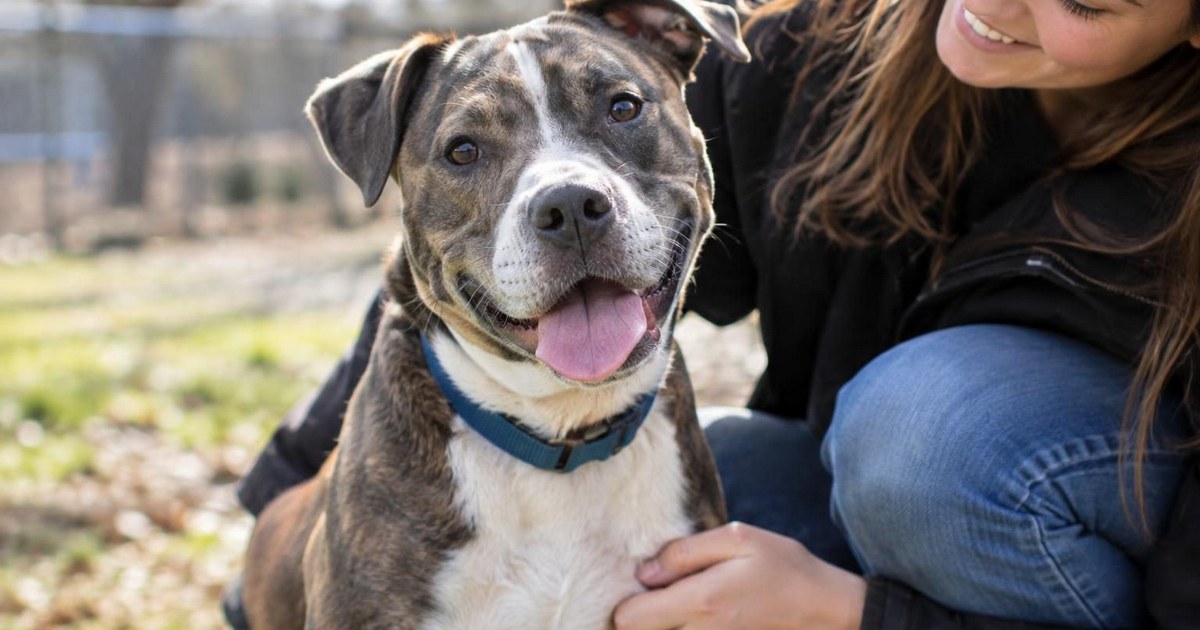
On January 29, 2021, a family arrived at the Kentucky Humane Society in Louisville with toys to donate to shelter dogs. As they were leaving, they noticed a large dog lying in the car park near the adoption lobby. They initially thought he was dead.
He was alive, but only just holding on. The dog, later named Ethan, was rushed to the humane society's veterinary ward. He weighed 38 pounds, though a dog of his size should have weighed more than 100 pounds. His temperature was so low that it initially did not register on a thermometer. The details later recorded in a Kentucky Senate resolution make clear how precarious those first hours were.
Ethan's story would eventually become known far beyond Louisville. Yet the most meaningful part is not a sudden transformation or a single dramatic act. It is the patient sequence that followed: emergency treatment, carefully controlled feeding, the first effort to stand, a toy picked up in his mouth, a foster home and, finally, the family who decided he was already where he belonged.
The family who found him had come to do something kind for dogs they did not know. By noticing Ethan and alerting staff, they gave one particular dog the chance to receive immediate professional care. Kentucky Humane Society veterinarian Dr. Emily Bewley and the shelter team had to treat a dog whose body had been pushed far beyond ordinary hunger.
Ethan spent five days in emergency care. When he returned to the shelter, he still could not walk independently. Staff provided IV fluids and medication, while his food was given in small, regular feedings every two hours. As a contemporaneous WTVQ update reported, the team was monitoring him through the period when refeeding syndrome was a serious concern.
That detail explains why Ethan's recovery could not be reduced to simply giving a starving dog plenty of food. In a severely emaciated animal, abrupt nutritional intake can lead to dangerous electrolyte shifts. The ASPCA's guidance for professionals caring for emaciated dogs recommends a structured protocol and close monitoring rather than unrestricted feeding.
For dog owners, this is the practical message within an extraordinary rescue: if a dog is profoundly thin, collapsed, cold, weak or unresponsive, it is an emergency. Food may feel like the obvious answer, but urgent veterinary help is the safer first step. Ethan survived because trained people could assess him, support his body and make adjustments as he regained strength.
The early updates from the shelter gave the public a different way to understand progress. Ethan did not need a grand gesture. He needed strength enough to do ordinary dog things again.
In early February, he stood on his hind legs by himself. He then picked up a toy and began to play. For a dog who had arrived unable to stand or walk on his own, those moments were not sentimental extras to the medical story. They were signs that he had energy to spare, interest in his surroundings and enough security to engage with something other than survival.
Toys had an especially fitting place in Ethan's recovery. The family who found him had come to donate toys, and supporters later sent more to the shelter as they followed his updates. Ethan's growing willingness to play gave staff and supporters a glimpse of the dog emerging beneath the medical crisis. The Kentucky Humane Society later reflected on the outpouring of support around his first rescue anniversary in a public update about Ethan.
His body was recovering, but personality was returning too. Five weeks after he was found, Ethan's weight had doubled. Dr. Bewley described him as affectionate and playful. He had completed vaccinations and been neutered, and while he still needed to build muscle in his back end, he was ready for a less clinical chapter of recovery.
That chapter began with someone already familiar with him. Jeff Callaway, the Kentucky Humane Society's facilities director, brought Ethan home to foster in late February. A foster home did not mark an instant finish line. It gave Ethan a quieter setting in which to continue gaining strength, settle into everyday routines and build a close bond away from the demands of a veterinary ward.
Then, on March 10, 2021, Callaway and his family formally adopted him. In its report on the adoption, Louisville Public Media noted the speed and scale of his physical progress, along with the people who had watched his personality take shape. The foster arrangement had become a permanent home.
There is a temptation to treat rescue stories as neat before-and-after images: suffering on one side, happiness on the other. Ethan's documented recovery offers something more useful. His life changed because people responded at several points. A family noticed him. Shelter staff moved quickly. Veterinary professionals did not take nutritional shortcuts. Caregivers allowed him time to rebuild. And a foster family made room for him to stay.
Ethan's life after adoption did not disappear from public view. He and Callaway took part in animal-welfare advocacy, and Ethan became associated with efforts to promote kinder treatment of animals in Kentucky. In 2024, Kentucky Educational Television described him as a dog whose recovery had grown into a mission of kindness and support for animal-protection work.
That public role matters, but it should not overshadow the dog at the centre of the story. Ethan was not rescued because somebody expected him to become a symbol. He was rescued because people saw an animal in crisis and treated his immediate needs seriously.
His recovery remains remarkable, not typical or guaranteed. Every severely neglected dog has different medical needs and prospects. Still, Ethan's path makes one truth hard to miss: healing often starts quietly. It can look like a temperature finally stabilising, a scheduled meal, a dog finding the strength to stand, or the first time he decides a toy is worth investigating.
Ethan went from a car park outside the Kentucky Humane Society to a home with Jeff Callaway and a later life spent encouraging kindness toward animals. The dog found at 38 pounds did not just gain weight. With expert care and steady human commitment, he regained the chance to be curious, playful and safely at home.
References
- apps.legislature.ky.gov
- UPDATE: Ethan gets to meet family who rescued him - WTVQ
- Louisville’s Favorite Good Boy Ethan The Dog Adopted By Foster Family
- ‘Inside Louisville’ talks to owner of ‘Ethan Almighty,’ a dog nursed back to health that inspires others with mission of kindness > KET
- Feeding Protocol & Nutrition Best Practices for Emaciated Dogs | ASPCApro
- In Honor of Ethan's Rescue Anniversary, Become a 2022 Member - Kyhumane
- Celebrity rescue Ethan supports bill to make animal torture a felony in Kentucky • Kentucky Lantern
- aspca.org
- aspca.org
- bestfriends.org