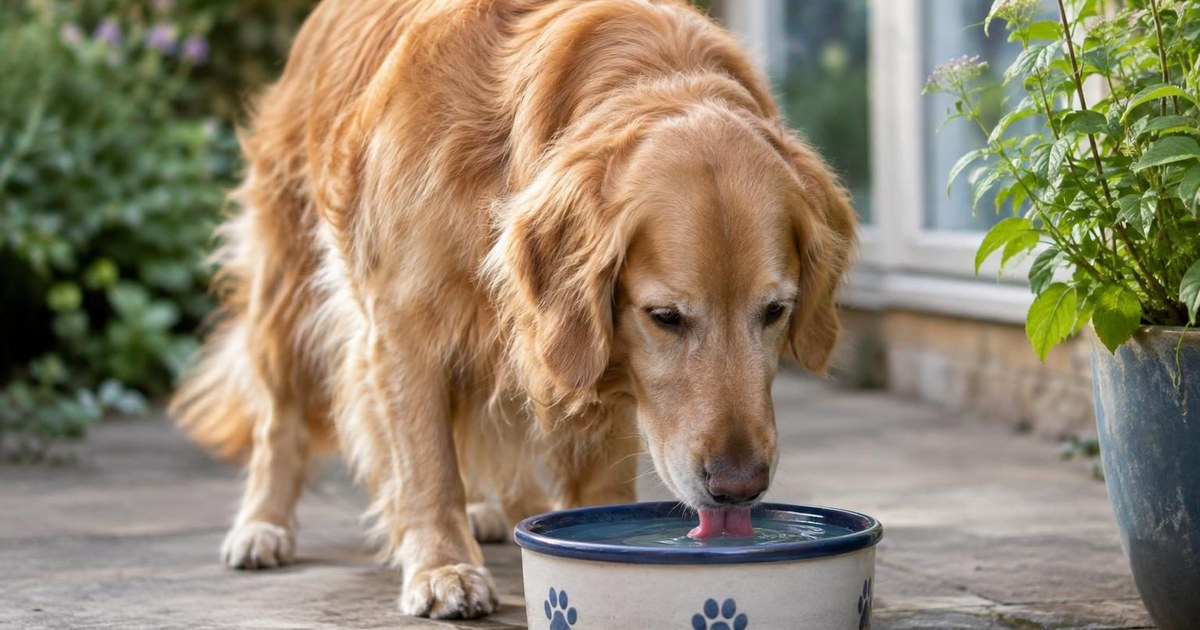
A dog who drains the water bowl after racing around the garden, a warm car journey or an extra-long walk is usually doing exactly what you would expect. The detail worth noticing is not one thirsty afternoon. It is the quiet change that keeps repeating: the bowl that needs filling twice a day when it once lasted until evening, the dog who wakes to drink overnight, or the new urgency to find water on every walk.
Think of the water bowl as a small daily diary. On its own, it cannot tell you why your dog is drinking more. It can, however, show you that something has changed before there are obvious signs of illness. That is useful information, not a reason to panic.
The first question is simple: has your dog really started drinking more, or are the circumstances different? A stretch of warm weather can make a noticeable difference, especially for dogs with thick coats, flat faces, dark fur or a strong enthusiasm for outdoor play. The American Veterinary Medical Association advises owners to take particular care with hydration and heat exposure in warm conditions, including making fresh water readily available. Its warm-weather pet safety guidance is a helpful reminder that a dog can overheat faster than an owner expects.
Activity matters too. A dog who has joined you on a longer hike, spent an afternoon at day care or played hard with another dog may drink more for a perfectly ordinary reason. Food can also change the picture. A move from wet food to dry food may mean more drinking simply because less moisture is arriving with meals. A new chew, treat routine or salty table scrap can create a short-lived spike as well.
What makes the bowl more meaningful is consistency. If the higher intake continues through ordinary, cool, low-key days, start looking at the rest of your dog’s routine. Is there more urine in the garden? Are toilet breaks becoming more frequent, or is your reliably house-trained dog asking to go out overnight? Has appetite changed? Is your dog losing weight, seeming unusually tired, vomiting, panting more than usual or behaving unlike themselves?
Those companion clues matter because increased thirst can appear alongside a range of health problems. For example, the AVMA notes that increased drinking and urination can be signs of diabetes in pets, alongside changes such as weight loss despite a good appetite. You can read its owner guide to diabetes in pets for a clear overview. Diabetes is only one possible explanation, which is exactly why it is not helpful to diagnose from a water bowl alone.
A practical way to get a clearer picture is to measure rather than guess. For two or three typical days, fill the bowl with a known amount of water, keep a note of refills and subtract what remains at the end of the day. If there are several dogs sharing a bowl, offer your dog a separate water station temporarily if that can be done calmly. Include water added to food, and note major variables such as heat, exercise, visitors, boarding, treats and any recent diet change.
You are not trying to perform a home diagnosis. You are creating a useful, ordinary record. “She seems thirstier” is a valuable concern. “She drank more than usual for three days, was asking out twice overnight and has been less interested in breakfast” gives a veterinary team a much clearer starting point.
Do not restrict water to see what happens. A dog with a genuine reason to drink needs access to water, and limiting it can make them uncomfortable or unwell. It is also kinder not to turn every drink into a tense observation. Fill the bowl as normal, watch the broader pattern and write down only what is genuinely different.
Timing can help you decide what to do next. If your dog is drinking more after unusual heat or exertion but returns to their normal pattern once life settles, keep water available and continue to monitor them. If the change is persistent, or it comes with increased urination, a change in appetite, weight, energy or behaviour, call your veterinary practice and explain what you have noticed. The AVMA’s general pet-care resources can help owners prepare for routine health conversations and preventive care.
Seek veterinary advice promptly if increased drinking comes with vomiting, marked weakness, collapse, confusion, a swollen-looking abdomen, difficulty breathing or an inability to keep water down. Those are not situations for a careful multi-day log. Tell the practice what has changed and when it began.
There is another reason not to dismiss a water-bowl shift in older dogs. Many owners adjust gradually to small changes because they happen one refill at a time. An extra splash in the morning becomes a second refill at lunch, and eventually the new routine feels normal. A quick mental comparison with last month can be more revealing than watching one day closely.
It is equally worth avoiding the opposite trap: deciding that a dog is “just getting older” when a new habit appears. Age can change routines, but new thirst still deserves context. An older dog who has always been a keen drinker may be unchanged. An older dog suddenly emptying a bowl that used to last all day has given you a sensible reason to check in.
The most reassuring approach is calm attention. Keep fresh water accessible. Notice what is normal for your own dog. Treat a one-off thirsty day as a piece of information, not a verdict. But if a larger thirst becomes part of the daily pattern, take that quiet clue seriously enough to record it and discuss it with your vet. Dogs cannot point to the symptom they are worried about. Sometimes the water bowl is the first place their routine speaks for them.